


Food Robotics 2.0: AI-Powered Robots Transform Restaurants, Food Manufacturing and Retail
 17 November 2026 05:24 PM
Summary: Food robotics is entering a new growth phase as companies shift from selling robot-made meals to providing automation solutions for restaurants, food manufacturers and grocery retailers. Driven by AI, labor shortages and cost pressures, the emerging B2B market is turning food robots into practical tools for large-scale commercial operations.
The food robotics industry is moving beyond its early experiments with robot-operated restaurants. The first generation of food robotics companies attempted to sell meals directly to consumers, combining restaurant management with robotics development. Many struggled with food quality, pricing, customer demand and operating costs. Now, Food Robotics 2.0 is taking a different approach: supplying automation systems to established food businesses rather than building restaurant brands from scratch.
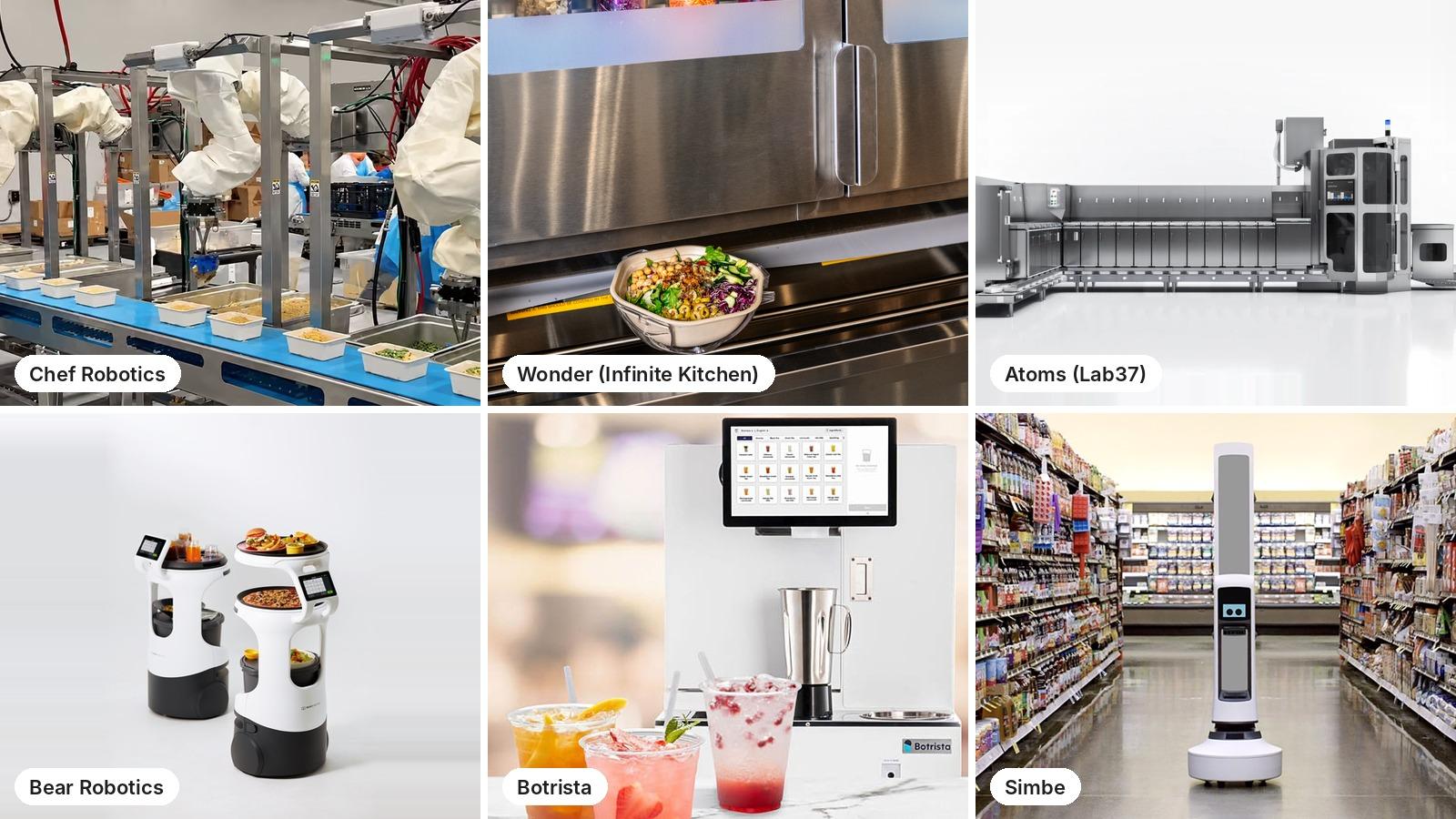
Robots are increasingly being deployed across food manufacturing, commercial kitchens, beverage preparation, restaurants and grocery stores. Chef Robotics, for example, develops flexible meal-assembly robots capable of handling different ingredients and portion sizes. Its robots have reportedly completed more than 145 million servings across production facilities in North America and Europe. Wonder and ATOMS are integrating robotics into food preparation and delivery operations, while Botrista automates beverages such as iced coffee, tea and lemonade. Bear Robotics' Servi robots transport food and dishes in restaurants, and Simbe Robotics' Tally scans supermarket shelves to identify missing products, misplaced items and pricing errors.
 |
 |
Investment is also gaining momentum. ATOMS, led by Uber co-founder Travis Kalanick, raised $1.7 billion in funding led by Andreessen Horowitz. Wonder, founded by former Jet.com co-founder Marc Lore, has raised approximately $3 billion. These investments reflect growing confidence in automation opportunities across the food industry.
However, moving from pilot projects to large-scale deployment requires more than functional robots. Systems must operate reliably throughout full shifts, handle changing ingredients and orders, maintain consistent output, and justify their costs through measurable returns on investment. Installation, maintenance, employee training, cleaning and technical support are equally important. Robotics-as-a-Service (RaaS) models can also help businesses reduce upfront investment and simplify fleet management.
The shift toward Food Robotics 2.0 reflects a broader transformation in commercial automation. Rather than replacing entire restaurant operations, robots are increasingly taking over repetitive, labor-intensive tasks while employees focus on food quality, customer service and operational management. As AI robotics, flexible automation and labor-saving technologies mature, food manufacturing, restaurants and grocery retail could become major growth markets for commercial robotics.