


Summary: Researchers at the Korea Research Institute of Chemical Technology (KRICT) have developed KMAP, a six-axis collaborative robotic platform that precisely controls antisolvent dispensing during perovskite solar cell fabrication. Combined with XGBoost and SHAP machine learning analysis, the system reveals how antisolvent properties, dispensing speed, and ambient humidity interact to influence crystallization and photovoltaic performance, offering a new approach to automated, high-throughput perovskite manufacturing and digital process optimization.
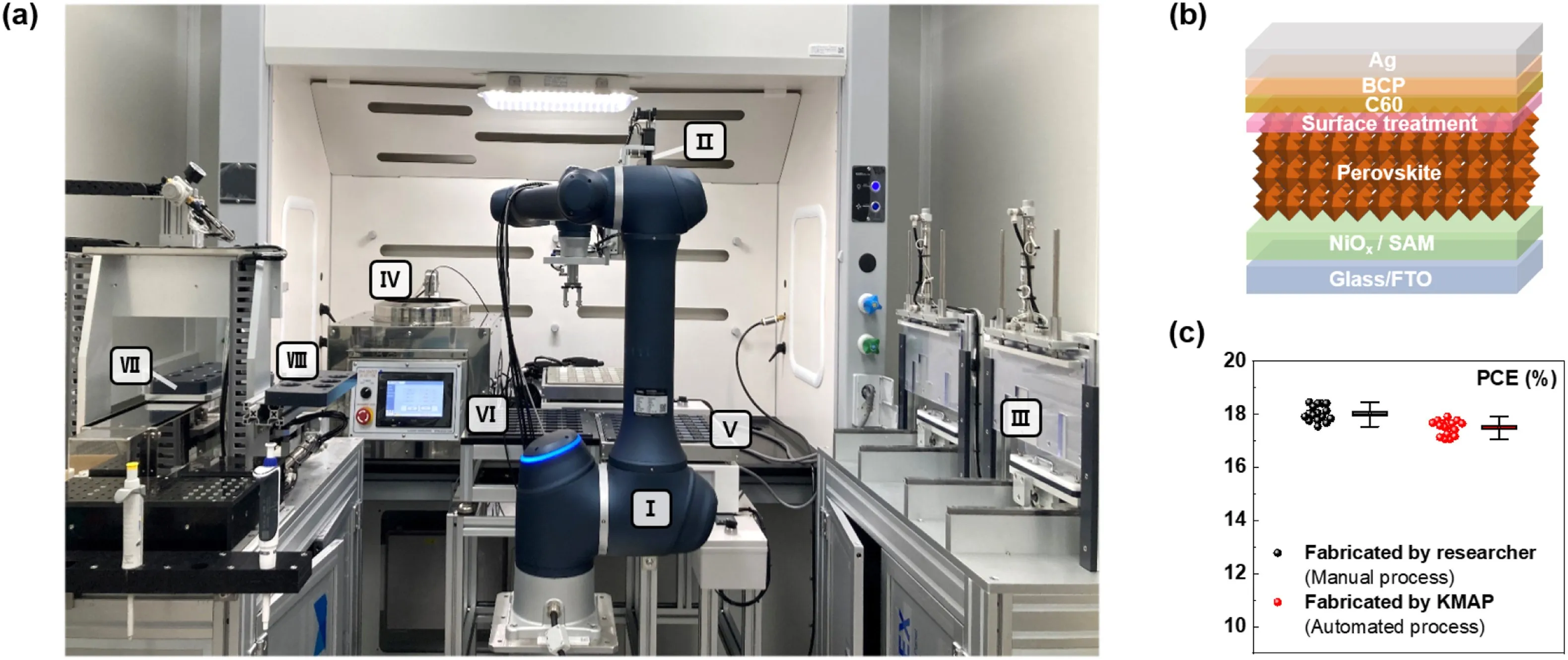
Figure 1 | KMAP automated spin-coating system, device structure, and statistical
comparison of solar cell efficiencies achieved through manual and robotic fabrication
Certified power conversion efficiency (PCE) for single-junction perovskite solar cells has reached 28.0%, while perovskite-silicon tandem solar cells have surpassed 35.2%. Spin coating remains one of the most widely used fabrication methods for high-efficiency devices because of its relatively simple equipment requirements and flexible solution-processing conditions.
However, conventional spin coating relies heavily on manual operation. Parameters such as pipetting speed, nozzle-to-substrate distance, and intervals between processing steps are difficult to standardize. These variations can lead to inconsistent results across researchers and experimental batches, with antisolvent dispensing representing one of the most challenging parameters to control quantitatively.
Traditional experiments generally classify dispensing as either fast or slow, making it difficult to quantify how dispensing speed affects perovskite film crystallization. This limits deeper investigations into the underlying fabrication mechanisms.
To address this challenge, a research team at the Korea Research Institute of Chemical Technology (KRICT) developed KMAP (KRICT Multi-layer Automated Spin Coating System for Perovskite Devices), a six-axis collaborative robotic platform for automated, multilayer perovskite fabrication.
The automated platform integrates substrate storage, a spin coater, hot plates, a cooling plate, and a solution-vibration reservoir system. It can process up to 40 substrates simultaneously, supporting high-throughput experimentation.
The robot reproduces manual pipetting movements while precisely controlling antisolvent dispensing speed. This transforms a previously qualitative processing parameter into a programmable and reproducible experimental variable.
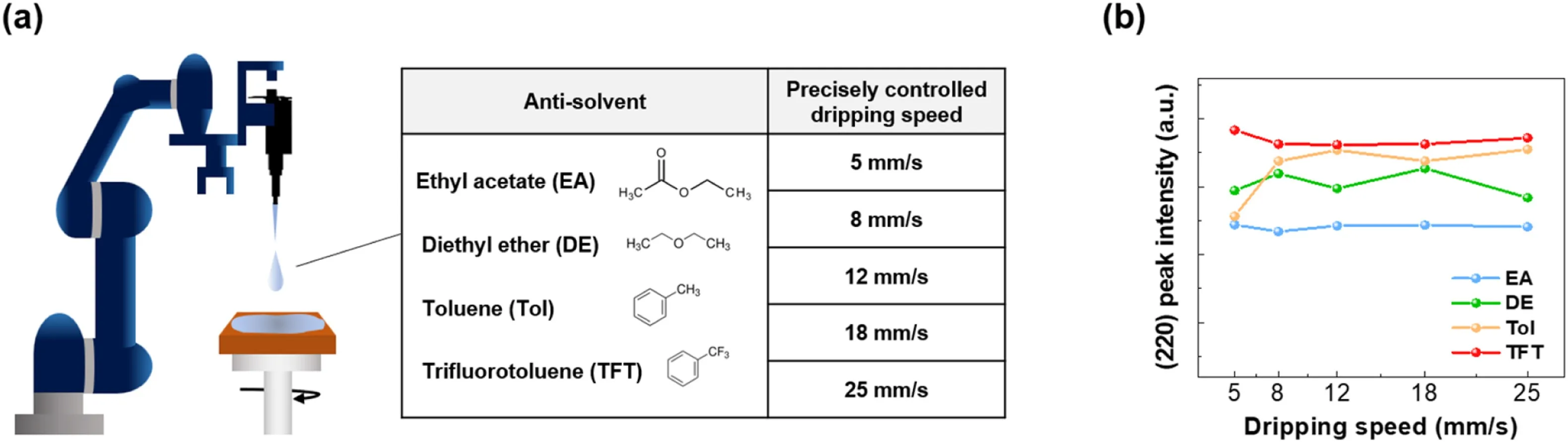
Figure 2 | KMAP antisolvent dispensing process and XRD peak intensity of
the perovskite (220) crystal plane under different antisolvents and dispensing speeds
The team selected the wide-bandgap perovskite composition Cs₀.₀₅MA₀.₁₅FA₀.₈₀Pb(I₀.₇₇Br₀.₂₃)₃, a material system of interest for tandem solar cells, to validate the platform.
Robotic fabrication achieved an average power conversion efficiency of 17.49%, with a standard deviation of 0.27%. This exceeded 97% of the efficiency achieved by an experienced researcher using manual fabrication, which reached 18.02%, demonstrating comparable reproducibility.
The small efficiency difference was mainly attributed to a fixed eight-second delay in the robotic workflow between depositing the precursor solution onto the substrate and starting spin coating. This delay affected short-circuit current and perovskite film crystallization.
The researchers then evaluated four antisolvents with distinct physical properties: ethyl acetate, diethyl ether, toluene, and trifluorotoluene. Five dispensing speeds were tested: 5, 8, 12, 18, and 25 mm/s, with 12 mm/s approximating conventional manual dispensing speed.
X-ray diffraction (XRD) and scanning electron microscopy (SEM) results showed that, except for diethyl ether, increasing the dispensing speed improved perovskite crystallinity and increased grain size across the other three antisolvents. Trifluorotoluene produced the largest grains.
Ethyl acetate, however, exhibited relatively high solubility for formamidinium iodide (FAI), increasing the likelihood of residual PbI₂ and potentially compromising film quality.
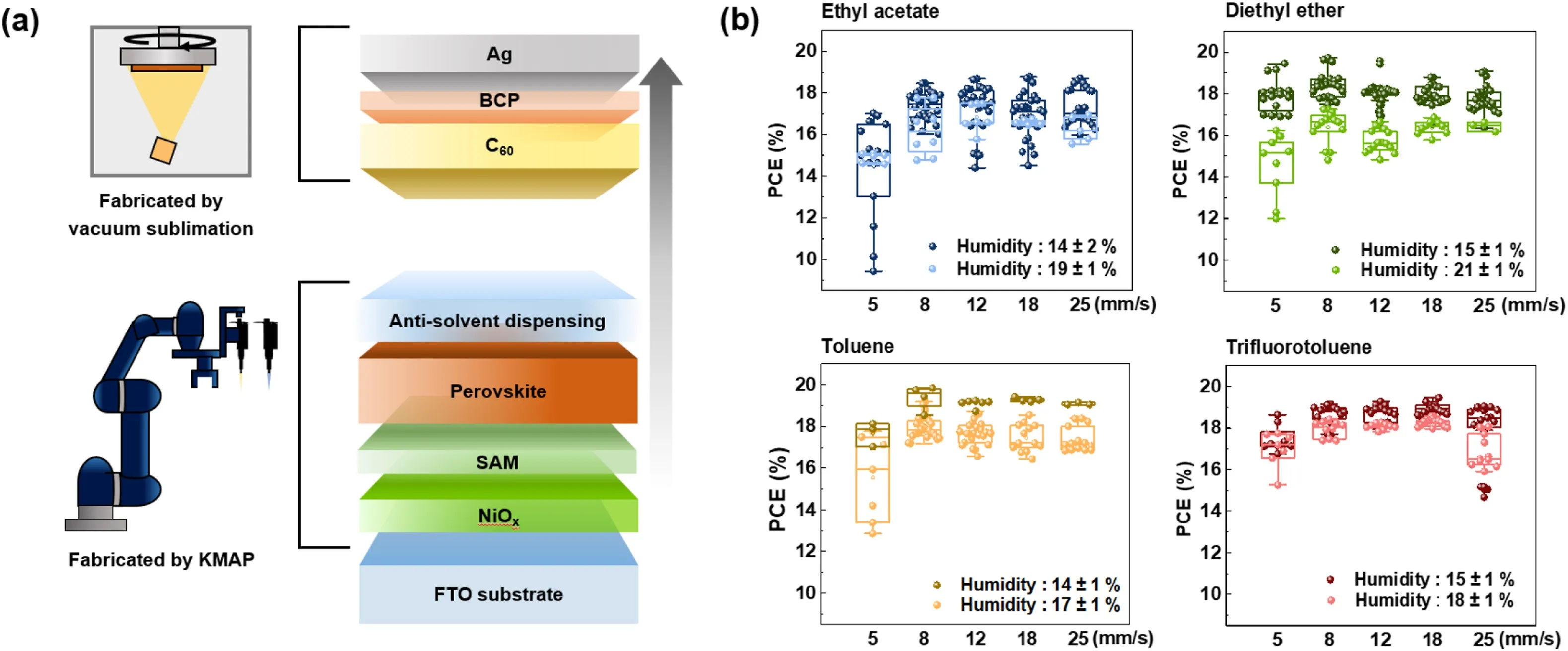
Figure 3 | Automated fabrication workflow and box plots of perovskite solar cell PCE under
different antisolvents, dispensing speeds, and humidity conditions
Device testing revealed that extremely slow dispensing at 5 mm/s significantly reduced solar cell efficiency and increased performance variation. This was attributed to prolonged contact between the antisolvent and the perovskite intermediate phase.
Diethyl ether and toluene, which have relatively low dielectric constants, were highly sensitive to ambient humidity. By contrast, ethyl acetate and trifluorotoluene, with higher dielectric constants, extracted DMF/DMSO solvents more effectively, making device performance less susceptible to humidity fluctuations.
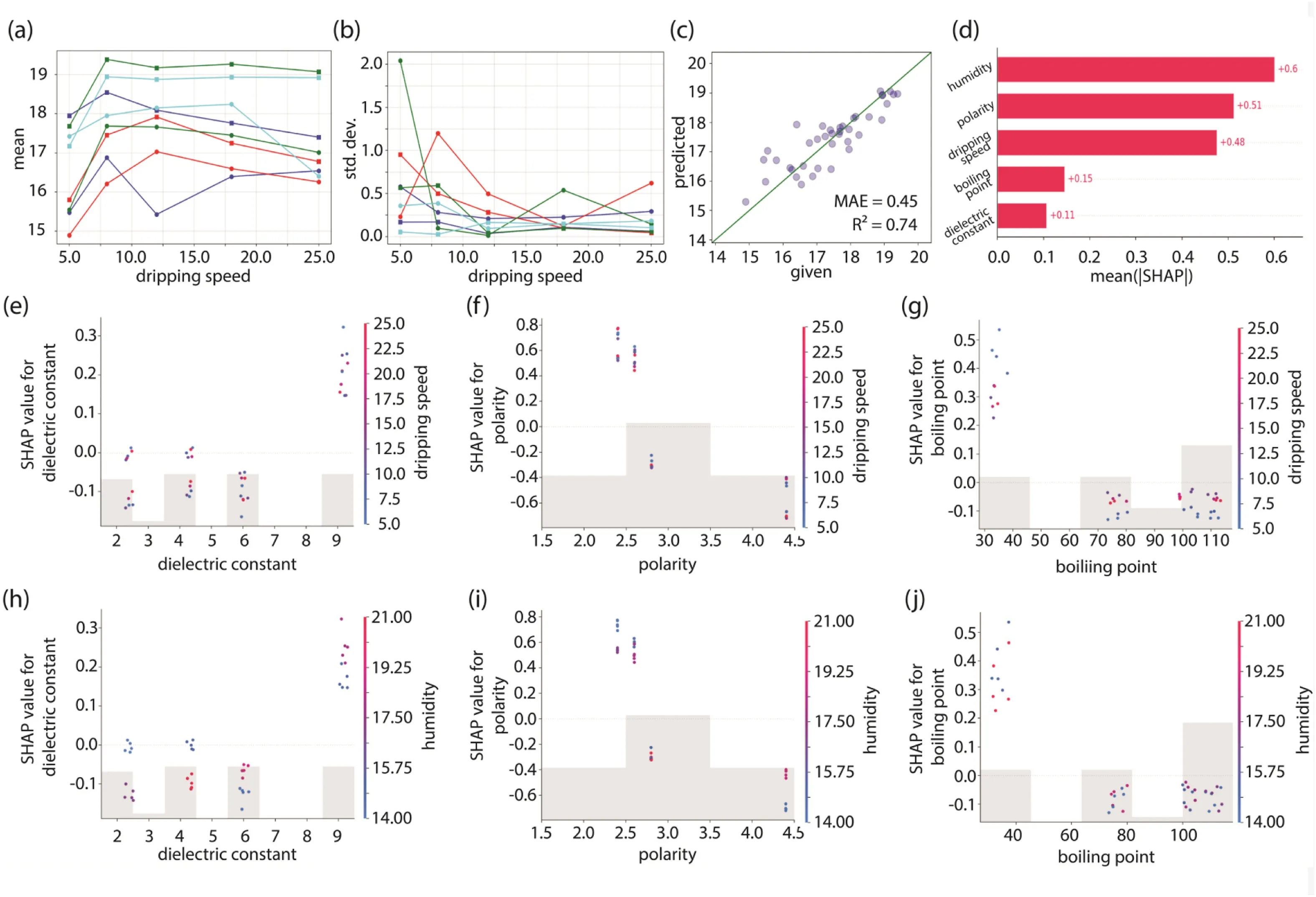
Figure 4 | Average device efficiency and standard deviation versus dispensing speed,
five-fold XGBoost model validation, and SHAP feature-importance analysis
Because dielectric constant, boiling point, polarity, dispensing speed, and humidity interact through complex nonlinear relationships, the team introduced an XGBoost machine learning model trained on 40 experimental datasets.
The model achieved an R² of 0.75 and a mean absolute error (MAE) of 0.45, demonstrating promising predictive performance.
SHAP (SHapley Additive exPlanations) analysis further revealed that dielectric constant was the strongest positively contributing parameter, while boiling point showed an opposite contribution trend. Humidity modified the influence of dielectric constant, whereas dispensing speed primarily regulated the effects associated with boiling point.
The robotic platform establishes a quantitative experimental framework for controlling previously inconsistent manual parameters in perovskite spin coating. Combined with machine learning, it provides a way to investigate complex interactions between material properties and fabrication conditions.
The findings represent a practical example of autonomous laboratory technology applied to photovoltaic research. They demonstrate that standardized, digitalized robotic fabrication can reproduce high-level manual processing with consistent results.
In the future, this approach could support high-throughput process screening for perovskite-silicon tandem solar cells, accelerate fabrication optimization, and help bridge the gap between laboratory research and commercial perovskite solar cell manufacturing.

